
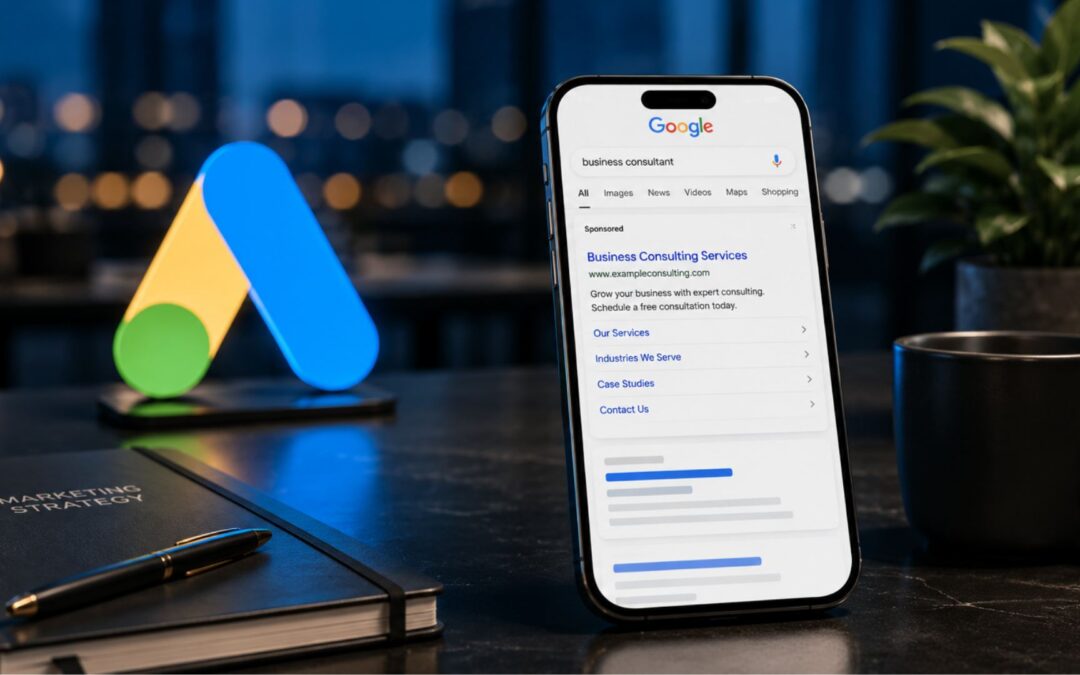
Every few years, someone announces that Google Ads is too expensive, too competitive, or too disrupted by the latest platform to remain worth the investment. And every time, the data tells a different story. Google still processes more than 8.5 billion searches per day. The search intent that drives professional service inquiries has not migrated to TikTok, or Instagram, or any other platform where businesses go to build awareness. It still lives on Google, and for law firms, medical practices, and professional service businesses across Canada and the United States, that is where the most valuable clients are actively looking for help right now.
That does not mean Google Ads work automatically or that throwing budget at the platform produces predictable returns. The firms that are seeing strong, consistent ROI from paid search in 2026 are the ones that understand how the platform actually works and have built their campaigns accordingly. The ones that are frustrated with the results are almost always making one of a handful of structural mistakes that no amount of additional budget will fix.
This blog breaks down why Google Ads remain the most powerful demand capture tool available for professional services and what it actually takes to use them well.
Demand Capture Versus Demand Creation: A Critical Distinction
Understanding why Google Ads work for professional services requires understanding the difference between two fundamentally different marketing objectives: demand creation and demand capture.
Demand creation marketing works by introducing a product or service to people who were not previously looking for it. Social media advertising, display advertising, influencer campaigns, and brand awareness content all fall into this category. They are valuable for building recognition over time, but they are not optimized for capturing the attention of someone who is actively looking for help right now.
Demand capture marketing works by appearing in front of someone who is already searching for what you offer. Google Ads are the dominant demand capture tool in digital marketing because they place your business in front of a person at the exact moment they have expressed a specific need. A person searching “criminal defence lawyer in Calgary” or “podiatrist accepting new patients in Los Angeles” is not browsing casually. They have a problem, they have decided they need help, and they are actively evaluating options. That is the highest-intent audience available anywhere in digital marketing.
For professional service firms where a single retained client can be worth thousands to tens of thousands of dollars, the value of appearing at that exact moment of intent is substantial. The cost of a click on a competitive legal or medical search term may feel high in isolation, but measured against the lifetime value of the client that click can produce, it is often one of the most efficient marketing investments available.
“Social media builds familiarity over time. Google Ads captures the moment someone has already decided they need what you offer. For professional services, that moment is worth investing in.”
The Economics of Legal and Medical Paid Search
Legal and medical search terms are among the most competitive and expensive in Google Ads, and for a straightforward reason: the lifetime value of a client in these industries makes the economics work even at high cost per click.
According to WordStream industry benchmark data, legal keywords can cost between $6 and $100 or more per click depending on the practice area and location, with personal injury, criminal defence, and immigration law consistently ranking among the most expensive categories in paid search. Medical and healthcare terms vary widely by specialty but routinely exceed $10 to $30 per click in competitive urban markets.
These numbers alarm many business owners when they first see them. But the relevant comparison is not click cost against some abstract standard of cheapness. It is click cost against client value. A personal injury law firm where a retained case generates $15,000 to $50,000 in fees can absorb a cost per acquired client of $500 to $1,500 and still produce a return that far exceeds what the same budget would generate through any other channel. A podiatry clinic where a new patient generates $2,000 to $4,000 in lifetime revenue can profitably pay $100 to $200 to acquire that patient through paid search.
The math only works when the campaign is structured correctly, the landing page converts efficiently, and the intake process captures the leads that the ads generate. When any one of those elements fails, the cost per acquired client rises to a point where the economics no longer work. That is why campaign structure and conversion optimization matter so much more than raw budget size in competitive professional services paid search.
Landing Page Alignment and Why It Determines Campaign Profitability
The most expensive mistake in Google Ads for professional services is sending paid traffic to a page that is not built to convert it. This happens more often than it should, and it is almost always the primary reason campaigns that should work do not.
A high-intent searcher who clicks a Google Ad has a very specific expectation in that moment. They clicked on an ad that made a specific promise, and they expect the page they land on to fulfill that promise immediately. If the ad says “Free Consultation for Employment Law Matters in Toronto” and the click leads to the firm’s general homepage, the visitor experiences a disconnect. They have to search again within the site to find the specific information they were looking for. A significant portion of them will not. They will leave and click the next result.
High-performing Google Ads campaigns for law firms and medical practices are built around dedicated landing pages that are designed for a single purpose: converting the specific visitor the ad attracted. These pages share specific characteristics:
- The headline directly mirrors or extends the promise made in the ad
- The content addresses the specific situation, concern, or question the search query reflected
- The call to action is singular, clear, and positioned prominently without requiring the visitor to scroll to find it
- Trust signals including credentials, reviews, and recognizable affiliations are visible near the top of the page
- The page loads quickly on mobile, since a majority of professional service searches happen on mobile devices
Improving landing page conversion rate is often the single highest-leverage action a professional services firm can take to improve Google Ads ROI, because it reduces the cost per acquired client without changing the ad spend or the bid strategy.
Why Strategic Structure Matters More Than Budget
One of the most persistent misconceptions about Google Ads is that better results require more budget. In reality, a poorly structured campaign with a large budget will consistently underperform a well-structured campaign with a modest one. Structure determines relevance, and relevance determines both cost and performance in Google Ads.
Google’s Quality Score system rewards ads and landing pages that are highly relevant to the search query they respond to. Higher Quality Scores produce lower costs per click and better ad placement for the same bid. A well-structured campaign that earns strong Quality Scores will reach the same or better positioning than a competitor spending more, simply because the relevance is tighter.
Strategic structure for professional services Google Ads campaigns includes:
- Tight keyword grouping: Each ad group should contain a small, closely related set of keywords so that the ad copy can be written to be highly specific to those terms rather than broadly applicable to many.
- Negative keyword lists: Preventing ads from showing for irrelevant searches is as important as targeting the right ones. A personal injury firm that does not want inquiries about workers compensation matters should exclude those terms to avoid paying for clicks that will not convert.
- Match type strategy: The combination of broad, phrase, and exact match keywords used in a campaign determines both the reach and the relevance of the traffic it generates. Over-reliance on broad match without proper negative keyword management is one of the most common and costly structural mistakes in professional services paid search.
- Ad copy testing: Running multiple ad variations and measuring which performs better is a continuous process, not a one-time setup. The messaging that resonates with a high-intent searcher in one practice area may not work in another.
- Conversion tracking: Every meaningful conversion event, form submissions, phone calls, and appointment bookings, must be tracked accurately so that campaign optimization is based on actual business outcomes rather than clicks and impressions.
A campaign built on these structural foundations will consistently outperform a larger campaign that has not invested the same attention in relevance and alignment.
Common Google Ads Mistakes That Professional Firms Make
The gap between Google Ads campaigns that produce strong ROI and those that produce frustration and wasted spend is almost always attributable to a small number of recurring structural mistakes. These are the ones we encounter most frequently working with professional service firms across North America.
- Running campaigns without conversion tracking: Optimizing a campaign without knowing which clicks produce consultations or clients is equivalent to driving without a speedometer. The budget gets spent, the clicks come in, and there is no way to evaluate whether any of it produced business results.
- Sending traffic to the homepage: The homepage is designed for many audiences. A paid search landing page should be designed for one specific audience with one specific intent. Sending paid traffic to a general page wastes the specificity advantage that the search query provides.
- Bidding on overly broad keywords: A family law firm bidding on “lawyer” will pay to appear in front of people looking for immigration help, criminal defence, real estate advice, and employment guidance. Most of those clicks will not convert, and the budget is depleted before reaching the people actually looking for family law services.
- Ignoring search term reports: Google Ads shows the actual search terms that triggered ads. Reviewing this report regularly and adding irrelevant terms to the negative keyword list is one of the most impactful ongoing optimization activities available, and one of the most frequently neglected.
- Setting campaigns and not revisiting them: Google Ads performance degrades over time without active management. Ad fatigue, changing competitor bids, quality score fluctuations, and seasonal search pattern shifts all require ongoing attention. Campaigns that are set up and left alone for months consistently underperform those that are actively managed.
How AI-Driven Bidding and Automation Are Changing Paid Search
Google Ads in 2026 is a significantly different platform from what it was five years ago, and most of that change has come from the integration of machine learning and AI into the bidding and optimization process. Understanding how these tools work is essential for any professional service firm running paid search campaigns.
Smart Bidding strategies including Target CPA (cost per acquisition), Target ROAS (return on ad spend), and Maximize Conversions use Google’s machine learning to adjust bids in real time based on a wide range of auction-time signals: device, location, time of day, search history, audience demographics, and more. When set up correctly with sufficient conversion data, these strategies consistently outperform manual bidding because they can process and respond to signals that no human bidder could evaluate at that speed and scale.
The catch is that AI bidding requires good data to work well. A campaign with fewer than 30 to 50 conversions per month does not have enough signal for the machine learning model to optimize effectively. For campaigns in that volume range, a more conservative manual or enhanced CPC bidding strategy may produce better results until sufficient conversion data has been accumulated.
Performance Max campaigns, which use AI to serve ads across all of Google’s properties including Search, Display, YouTube, Gmail, and Maps from a single campaign, are becoming an increasingly significant part of the paid search landscape in 2026. For professional service firms, Performance Max can expand reach efficiently when combined with strong creative assets and clear conversion goals, but it requires careful monitoring to ensure the budget is concentrating on the highest-value placements rather than spreading across lower-intent surfaces.
Responsive Search Ads, which allow advertisers to provide multiple headlines and descriptions that Google assembles and tests automatically, are now the standard ad format. The quality of the assets provided determines the ceiling of what the AI can achieve. Providing specific, high-relevance headline and description options rather than generic ones gives the system better material to work with and produces meaningfully stronger results.
The businesses getting the most from AI-powered Google Ads in 2026 are not the ones handing everything to automation. They are the ones who understand how the automation works, provide it with the right inputs, and remain actively engaged in reviewing what the data is telling them. AI enhances the capability of a skilled campaign manager. It does not replace the need for strategic thinking.
References
- (2026). About Quality Score: How relevance determines ad cost and placement. support.google.com
- (2026). About Smart Bidding: AI-powered bid strategies and how to choose the right one. support.google.com
- (2026). Performance Max campaigns: How to use AI across Google properties. support.google.com
- WordStream by LocaliQ. (2025). Google Ads industry benchmarks: Average CPC, CTR, and conversion rates by industry. com
- Search Engine Journal. (2026). Google Ads in 2026: What professional service firms need to know about paid search. com
- (2025). Landing page optimization for paid search: Conversion benchmarks and best practices. unbounce.com
- Nielsen Norman Group. (2024). How users interact with paid search results: Intent, trust, and click behavior. com
- (2025). Legal Trends Report: How clients find and choose legal representation online. clio.com
- SocialEyes Communications. (2025). Google Ads vs. Meta Ads: Which Platform is Best for Legal Campaigns? com
- SocialEyes Communications. (2025). How Google Ads New Features Are Helping Law Firms Attract High-Value Clients. com
- SocialEyes Communications. (2025). From Clicks to Clients: How to Track Real ROI on Your Marketing Campaigns. com
The Bottom Line
Google Ads remain the most powerful demand capture tool available to professional service firms in 2026 because the intent behind the searches they intercept is simply not replicated anywhere else in digital marketing. A person searching for a family lawyer, a podiatrist, or a criminal defence firm has already made the decision to seek help. The only question is which firm appears credibly in that moment of search and earns the click.
Winning that click consistently is a function of campaign structure, landing page quality, conversion tracking, and increasingly, how well a firm feeds the right data into Google’s AI bidding systems. Budget matters, but it is not the primary variable. The firms getting the strongest ROI from paid search across Canada and the United States are the ones that have invested in building campaigns the right way and that treat optimization as an ongoing discipline rather than a one-time setup.
The economics of legal and medical paid search are demanding but favorable for businesses that understand them. A well-managed Google Ads campaign for a professional service firm is not an expense. It is a system for capturing high-intent demand that would otherwise go to a competitor who showed up first.
Ready to Run Google Ads That Actually Produce Clients, Not Just Clicks?
At SocialEyes Communications, we build and manage Google Ads campaigns for law firms, medical practices, and professional service businesses across Canada and the United States. We do not just run ads. We build conversion-focused paid search systems: keyword strategy, landing page alignment, conversion tracking, AI bidding configuration, and full-funnel attribution from first click to retained client.
If your current Google Ads campaigns are generating clicks but not clients, or if you have never run paid search and want to understand whether it is right for your business, we can help you build a clear picture of what is possible and what it takes to get there.
Website: www.socialeyescommunications.com
Email: info@socialeyescommunications.com
Phone: 1-888-762-1285